Can Stores Ban You for Returning Too Many Items? What You Need to Know
Can stores ban customers for making too many returns? Discover how retailers enforce return policies, when customer restrictions may apply, and what consumer rights protect you when returning unwanted or defective products.
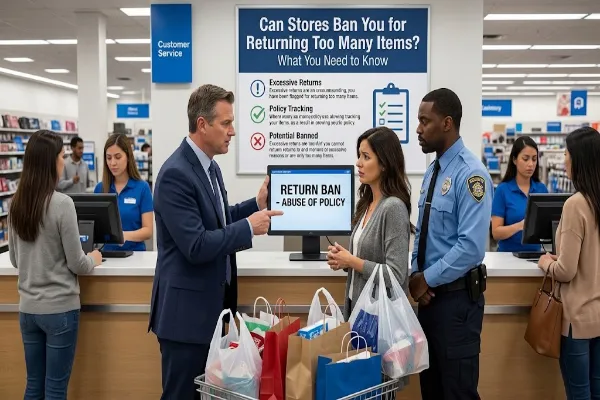
Returning an item to a store is usually a straightforward process. A customer buys a product, discovers that it does not meet their needs, and brings it back in accordance with the retailer’s return policy. However, when someone makes frequent returns, the situation can become more complicated.
Some retailers monitor return activity and may restrict customers who return a high percentage of their purchases. Depending on the store’s policies, the circumstances of the returns, and the applicable consumer protection laws, a customer could face restrictions, lose access to certain return privileges, or even be prohibited from making future purchases.
So, can stores legally ban you for returning too many items? In many cases, yes, but the answer depends on where you live, why the items are being returned, and whether the retailer is following the law.
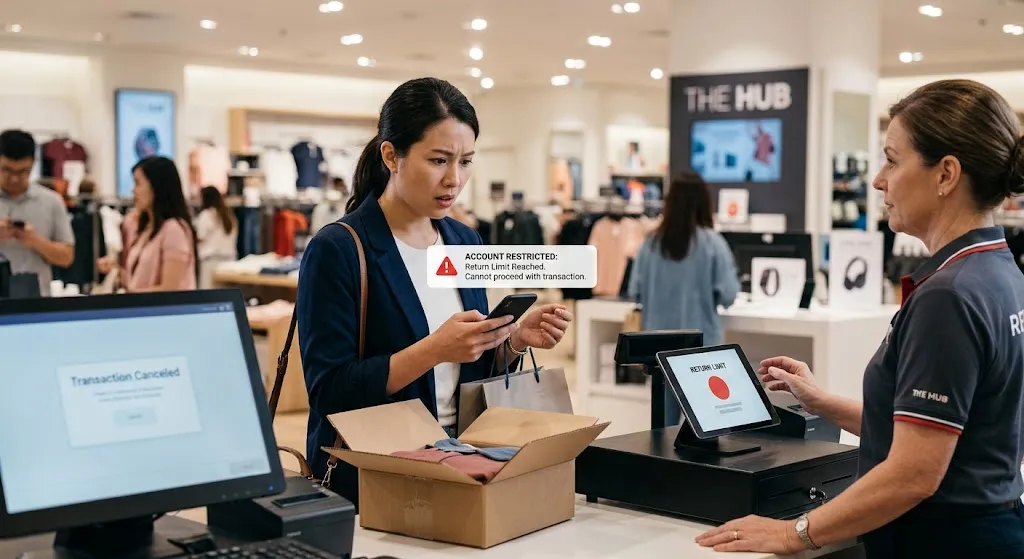
Can a Store Ban You for Making Too Many Returns?
In many countries, private retailers have considerable discretion over their return policies. If a store voluntarily accepts returns for reasons such as a change of mind, it may establish reasonable limits on that privilege.
For example, a retailer might decide to restrict customers who return nearly every purchase, repeatedly request refunds without receipts, or appear to be abusing a flexible return policy.
Depending on its terms and local law, the store could take several actions:
- Refuse a return that falls outside its stated policy.
- Require a receipt or other proof of purchase.
- Limit returns to the original payment method.
- Suspend or restrict a customer’s account or membership.
- Decline future transactions with a particular customer.
Some retailers use return-monitoring systems to identify unusual purchasing and refund patterns. These systems may evaluate the frequency of returns, the value of refunded goods, missing receipts, and other factors.
However, a high number of returns does not automatically mean that a customer has violated a policy. Someone who frequently purchases clothing in different sizes, for example, may have legitimate reasons for returning items.
Why Do Stores Monitor Customer Returns?
Retailers monitor returns primarily to reduce financial losses and prevent fraud. Processing returned merchandise can be expensive, especially when products cannot be resold at their original price.
Several situations may attract additional scrutiny.
1. Frequent Returns
A customer who repeatedly buys products and returns most of them may be flagged by the retailer’s system. The store might investigate whether the activity reflects ordinary shopping behavior or potential misuse of its return policy.
There is no universal number of returns that automatically triggers a ban. Each retailer may use different criteria, and some may consider the percentage of purchases returned rather than the total number.
2. Returns Without Receipts
Returning products without receipts can make it harder for a store to verify the original transaction. Some retailers permit receipt-free returns but impose limits, offer store credit instead of cash, or require identification.
Repeated receipt-free returns may result in stricter verification requirements.
3. Suspected Return Fraud
Retailers may take action when they suspect that a customer is returning stolen merchandise, using counterfeit receipts, claiming refunds for items that were never purchased, or repeatedly attempting to receive duplicate refunds.
These situations are different from ordinary returns. Suspected fraud may justify more serious restrictions and, depending on the evidence and applicable law, further action.
4. Excessive Use of Generous Return Policies
Some stores offer extended return windows, free return shipping, or flexible refund arrangements to attract customers. However, these benefits do not necessarily provide unlimited return privileges.
If a retailer’s published policy prohibits abuse or establishes specific restrictions, repeated use beyond those limits may result in a loss of return privileges.
How Do Stores Decide Whether to Ban a Customer?
The decision-making process varies by retailer. Some businesses rely on employees and managers, while others use automated systems to identify unusual return activity.
A store may consider several factors:
Return frequency: How often does the customer return merchandise compared with the number of purchases?
Return value: Are the refunds unusually large or concentrated in expensive products?
Condition of merchandise: Are items being returned in acceptable condition, or do they show signs of damage or use inconsistent with the return policy?
Proof of purchase: Can the customer provide receipts, order confirmations, or other transaction records?
Previous warnings: Has the customer already been informed that their return activity violates store policy?
Evidence of fraud or abuse: Are there specific indications that the customer is deliberately exploiting the return process?
Automated systems can make mistakes. A customer may be flagged because of frequent legitimate returns, purchases made for family members, or an unusual shopping pattern.
For that reason, anyone who believes a restriction was imposed incorrectly should ask the retailer to explain the decision and review the relevant transactions.
Can Stores Ban You Even If You Have Receipts?
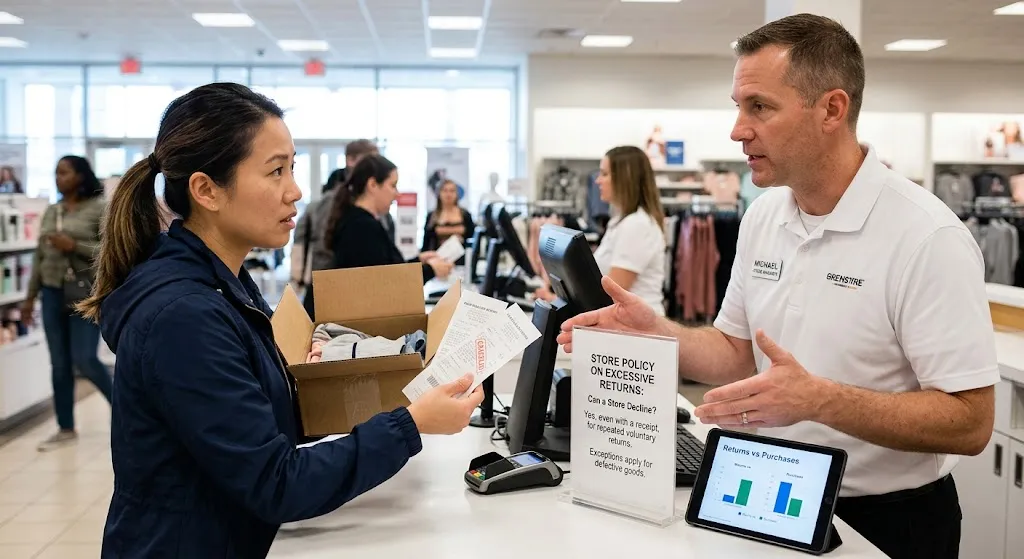
Yes, in some circumstances.
A receipt generally helps establish that a product was purchased from the retailer and may demonstrate that the return falls within the permitted period. However, it does not necessarily guarantee that every return will be accepted or that a customer can continue returning products indefinitely.
For example, a store may have a policy limiting returns to a certain period or restricting voluntary returns after repeated activity. If the customer has complied with the policy, the retailer’s ability to impose additional restrictions will depend on the applicable terms and law.
The distinction between a voluntary return and a legally protected consumer claim is particularly important.
If a customer simply changes their mind about a product purchased in a physical store, the retailer may have more discretion to refuse the return, depending on local law and its published policy.
If the product is defective, unsafe, incorrectly described, or otherwise covered by consumer protection legislation, the customer’s legal rights may be different. A store generally cannot avoid mandatory consumer obligations merely by labeling a customer a frequent returner.
What If the Item Is Defective?
This is one of the most important distinctions in return disputes.
A customer who returns a product because they no longer want it is not necessarily in the same legal position as someone who returns an item because it does not work as promised.
Depending on the jurisdiction, defective goods may qualify for remedies such as repair, replacement, a price reduction, or a refund.
For example, imagine that a customer purchases three electronic appliances over several months. Each appliance develops a fault during normal use, and the customer requests a remedy supported by the applicable consumer protection rules.
A retailer should not automatically treat those claims as policy abuse simply because the customer has made several complaints.
The precise remedy depends on the product, the nature of the defect, the time since purchase, and the law governing the transaction.
Customers should retain receipts, warranty documents, photographs, repair records, and written communications to support legitimate claims.
Are Online Stores Allowed to Ban Frequent Returners?
Online retailers may also restrict customers who repeatedly return merchandise, subject to applicable laws and contractual obligations.
Online shopping often produces higher return rates because customers cannot physically inspect products before purchasing them. Clothing may not fit, colors may look different in person, and product descriptions may not fully communicate an item’s characteristics.
Retailers understand that some returns are an ordinary part of online commerce. Nevertheless, they may monitor return behavior to control shipping expenses, handling costs, and losses from products that cannot be resold.
Depending on the terms and circumstances, an online retailer might restrict an account, limit free return shipping, require additional verification, or cancel future orders.
Before assuming that an account restriction is unlawful, customers should review the retailer’s terms of service, return policy, and the rules that apply to online purchases in their country.
In some jurisdictions, online shoppers have statutory cancellation rights for certain purchases made at a distance. Those rights may differ from the rules governing purchases in physical stores.
Can a Store Refuse to Sell You Anything in the Future?
A retailer may sometimes decline future business from a customer, but that discretion is not unlimited.
Private businesses are generally allowed to establish legitimate commercial rules and protect themselves against fraud. However, their decisions must comply with applicable laws, including rules against unlawful discrimination and other prohibited practices.
A store cannot necessarily justify every refusal by claiming that a customer has returned too many items. The circumstances matter.
For example, a restriction based on documented return-policy abuse may be treated differently from a refusal motivated by a legally protected characteristic or an attempt to prevent a consumer from exercising mandatory legal rights.
Customers should also distinguish between a ban from a particular store, a restriction on an online account, and a broader prohibition across an entire retail chain. The scope of a restriction depends on the retailer’s policies and the applicable legal framework.
What Should You Do If a Store Bans You for Too Many Returns?
If a retailer tells you that you can no longer make returns or purchase products, it is important to understand the reason before taking further action.
Step 1: Ask for the Specific Reason
Politely ask whether the restriction concerns a particular transaction, your return history, suspected fraud, or another issue.
Request a copy or explanation of the relevant return policy. If the decision was made through an automated system, ask whether the retailer offers a review process.
Step 2: Gather Your Purchase Records
Collect receipts, invoices, order confirmations, refund notices, and other documents showing when you purchased and returned the items.
If the returns involved defective merchandise, preserve photographs, warranty documents, and any communication describing the defects.
Step 3: Check the Return Policy
Look at the policy that applied when you made each purchase. Pay attention to return deadlines, exclusions, proof-of-purchase requirements, and any provisions concerning excessive returns.
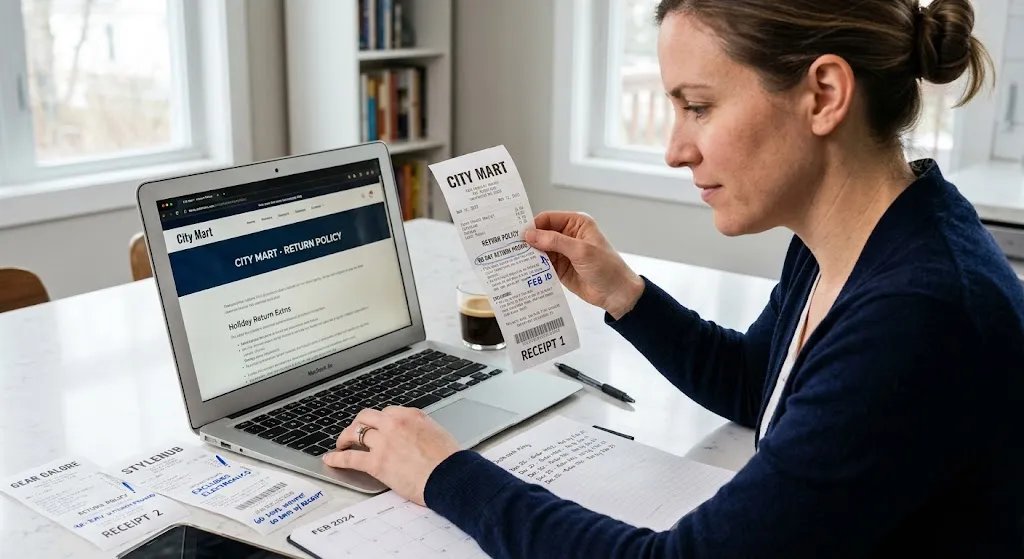
A retailer’s current policy may differ from the one in effect at the time of an earlier transaction.
Step 4: Distinguish Policy Restrictions From Legal Rights
If the store refuses a discretionary return, it may be acting within its policy. If it refuses to address a defective product or denies a statutory consumer remedy, the situation may require a different analysis.
The law of the country where the transaction occurred is particularly important.
Step 5: Escalate the Complaint if Necessary
If you believe the restriction is unfair or unlawful, contact the retailer’s customer service department or complaints team.
If the issue concerns a potential violation of consumer protection law, you may also contact the relevant consumer protection authority or seek legal advice. Provide clear documentation rather than relying solely on a verbal account of what happened.
Do Return Limits Differ Between Countries?
Yes. Return rights and the legal limits on retailers’ decisions vary considerably by jurisdiction.
In the United States, there is generally no universal federal rule requiring physical stores to accept every unwanted purchase. State laws and individual store policies can affect the outcome, while federal and state protections may apply to particular types of transactions and products.
In the European Union, consumers generally have a 14-day withdrawal period for many purchases made online or away from business premises, subject to exceptions. This is different from the rules for ordinary purchases in physical stores. National laws may provide additional protections.
Other countries have their own consumer protection frameworks, including rules concerning defective goods, refunds, misleading practices, and unfair contractual terms.
Consequently, a retailer’s ability to restrict discretionary returns should not be confused with its obligation to respect statutory consumer rights.
Customers in North Macedonia, for example, should consult the applicable national consumer protection legislation and the competent consumer protection authorities when a dispute involves defective goods, online purchases, or a refusal to honor a legal remedy.
How Can You Avoid Problems With Frequent Returns?
You do not need to stop returning products when a return is justified. However, a few practical habits can help prevent misunderstandings and unnecessary disputes.
- Read the return policy before buying. Check the deadline, exclusions, and refund conditions.
- Keep receipts and order confirmations. These documents help establish where and when an item was purchased.
- Inspect products promptly. Report damage, missing components, or defects as soon as reasonably possible.
- Use accurate return reasons. Explain whether the product is defective, incorrectly described, unsuitable, or simply unwanted.
- Avoid unnecessary purchases. Comparing measurements, specifications, and product descriptions before ordering may reduce avoidable returns.
- Keep records of disputes. Save emails, refund confirmations, and written explanations of any restrictions.
- Understand your legal rights. A store policy cannot automatically override mandatory consumer protection rules.
These steps are especially useful for online shoppers who frequently order multiple sizes or variations of the same product.
Frequently Asked Questions
Is there a legal limit on how many items you can return?
There is no single universal limit that applies to every retailer and every country. Individual stores may establish limits for voluntary returns, while consumer protection laws may provide separate rights for defective goods and qualifying online purchases.
Can a store ban you after one return?
A retailer may refuse a particular return or restrict future business in some circumstances, depending on its policies and applicable law. However, one ordinary return does not automatically justify every possible restriction.
Can a store refuse a return if I have the receipt?
Yes, if the return falls outside the applicable policy or an exclusion lawfully applies. However, a receipt may support your claim, and it does not eliminate any mandatory legal rights you have.
Can a store ban me for returning defective products?
A store may investigate unusual return activity, but legitimate claims involving defective goods should be assessed under the applicable consumer protection rules. A retailer cannot necessarily use its general return policy to avoid legal obligations.
Can an online retailer close my account because I return too much?
Depending on its terms and local law, an online retailer may restrict or close an account for certain patterns of activity. However, account restrictions do not automatically eliminate statutory rights connected to purchases already made.
Can I challenge a return ban?
Yes. You can ask the retailer to explain its decision, request an internal review, and submit evidence of your purchases and returns. If the restriction appears to violate consumer protection law, you can contact the relevant authority or obtain legal advice.
Final Thoughts
Stores can sometimes restrict or ban customers who repeatedly return merchandise, particularly when the activity appears to involve fraud or abuse of a voluntary return policy. However, the number of returns alone does not tell the whole story.
The important distinction is between a retailer’s discretionary return policy and a customer’s legal rights. Returning an unwanted item is different from requesting a remedy for a defective product or exercising a statutory cancellation right.
For consumers, the best approach is to understand the policy, keep clear purchase records, and communicate directly with the retailer when a problem arises. For businesses, fair and transparent return rules can help prevent abuse without unfairly penalizing customers who have legitimate reasons to return their purchases.
Ultimately, whether a store can legally ban a customer depends on the circumstances, the terms governing the transaction, and the consumer protection laws that apply.