Why Free Shipping Works: How It Increases Sales & Customer Loyalty
Free shipping is more than just a popular promotion—it’s a proven strategy that influences customer behavior, increases conversions, and builds long-term loyalty. Discover the psychology behind why free shipping works and how businesses use it to boost online sales and improve the shopping experience.

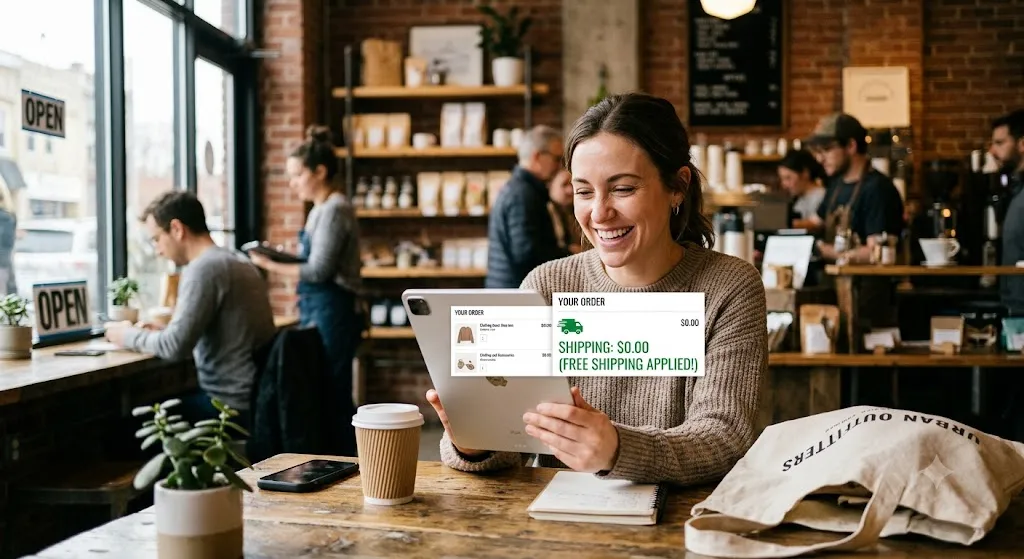
The power of "Free": A subtle banner at checkout can be the single biggest driver converting online shoppers into buyers.
TL;DR
Free shipping is one of the most effective tools in e-commerce because it removes a major barrier to purchase, increases customer trust, reduces cart abandonment, and often encourages shoppers to spend more. By simplifying pricing and improving the overall shopping experience, businesses can boost conversions, strengthen customer loyalty, and stay competitive in the online marketplace.
Free shipping has become one of the most powerful strategies in e-commerce. But why does free shipping work so well? From reducing cart abandonment to increasing average order value, free delivery influences customer psychology and purchasing decisions in ways that businesses can measure.
Why Does Free Shipping Work?
Free shipping works because it removes a psychological barrier at checkout. Customers often perceive shipping fees as an extra cost, while free delivery creates a feeling of value, transparency, and reward. For businesses, it can increase conversions, reduce abandoned carts, and encourage larger purchases.
At first glance, free shipping might seem like a simple marketing tactic. After all, shipping is rarely free for the retailer. Someone still pays for packaging, transportation, and delivery. Yet millions of businesses around the world continue to offer it because the results speak for themselves.
Retail experts have studied consumer behavior for years, and one conclusion appears repeatedly: shoppers value free shipping far more than its actual monetary cost. It influences decisions, increases customer satisfaction, and encourages people to spend more.
So why does free shipping work so well? The answer lies in psychology, customer expectations, and smart business strategy.
Key Takeaways
- Free shipping reduces one of the biggest barriers to online purchases by eliminating unexpected delivery costs.
- Customers often perceive free shipping as more valuable than an equivalent price discount.
- Offering free shipping can increase conversion rates and reduce shopping cart abandonment.
- Minimum order thresholds encourage shoppers to spend more, raising the average order value.
- Transparent pricing builds trust and improves the overall customer experience.
- Free shipping is a proven strategy for increasing customer loyalty and repeat purchases.
- Businesses can offset shipping costs through pricing strategies, promotions, or negotiated carrier rates.
- In today’s competitive e-commerce market, free shipping has become an important factor influencing buying decisions.
Customers Hate Unexpected Costs
Imagine browsing an online store and finding exactly what you want. The price looks reasonable, the reviews are positive, and you’re ready to buy.
Then you reach the checkout page.
Suddenly, an additional shipping fee appears.
It may only be a few dollars, but for many shoppers, it feels like an unpleasant surprise. The product that seemed affordable just became more expensive.
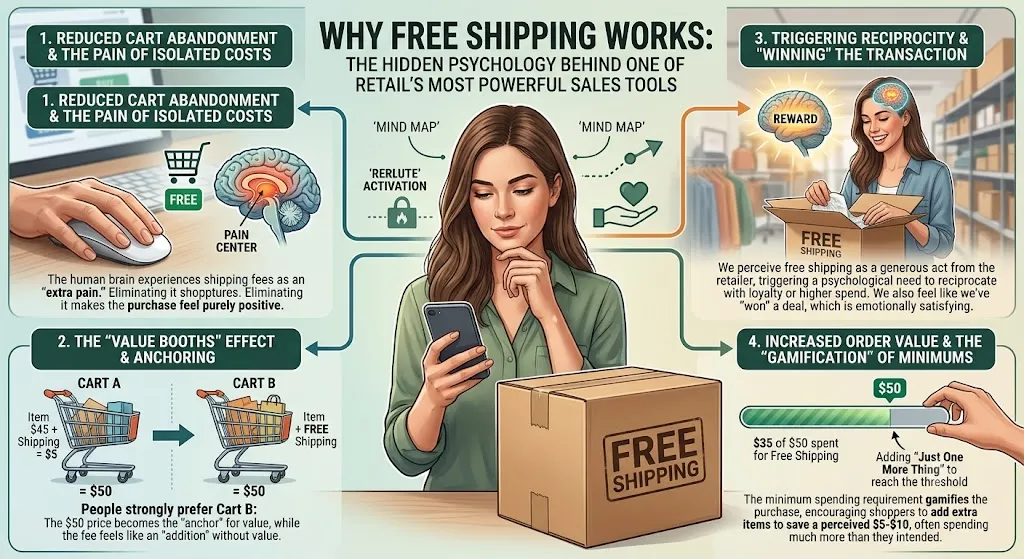
This is one of the biggest reasons shopping carts are abandoned every day.
Consumers naturally focus on the total amount they’ll pay, not just the product price. When shipping charges appear late in the buying process, they can create frustration and uncertainty.
Free shipping removes that final obstacle. Instead of making customers reconsider their purchase, it allows the buying process to continue smoothly.
Why Do Customers Prefer Free Shipping?
Behavioral economists have long pointed out that the word “free” carries extraordinary emotional power.
People don’t simply see free as a discount. They often perceive it as a risk-free opportunity.
Even if two offers cost almost the same overall, customers frequently choose the option that includes free shipping rather than a lower product price plus a delivery fee.
For example:
- Product A costs $45 with free shipping.
- Product B costs $40 plus $5 shipping.
Financially, both purchases are identical.
Psychologically, they feel completely different.
Many buyers believe they are getting a better deal with Product A because they avoid paying a visible shipping charge.
This emotional reaction helps explain why free shipping consistently increases conversion rates across many industries.
It Builds Trust
Online shoppers cannot physically inspect products before buying.
They already place significant trust in a retailer by entering payment information and waiting for delivery.
Unexpected fees can damage that trust.
Free shipping creates transparency.
When customers know the final price immediately, they feel more confident that the retailer is being honest and straightforward.
That confidence often leads to higher purchase rates and stronger customer loyalty.
Businesses that make pricing simple tend to earn repeat customers more easily than those with complicated checkout processes.
Free Shipping Encourages Larger Orders
One of the smartest ways businesses use free shipping is by setting a minimum purchase requirement.
You’ve probably seen offers like:
- Free shipping on orders over $50
- Spend $75 and receive free delivery
- Free shipping when you buy two or more items
Instead of losing money, retailers often increase their average order value.
Customers who planned to spend $42 may decide to add another product just to qualify for free shipping.
In many cases, shoppers spend significantly more than the shipping would have cost in the first place.
This strategy benefits both sides.
Customers feel they’re receiving extra value, while businesses increase revenue per transaction.
It Reduces Cart Abandonment
Cart abandonment remains one of the biggest challenges in e-commerce.
People frequently browse products, add items to their carts, and leave without completing the purchase.
There are many reasons this happens, but shipping costs consistently rank among the most common.
When businesses eliminate shipping fees—or clearly communicate free shipping early—they reduce one of the biggest barriers preventing customers from finishing their purchase.
The result is often a noticeable improvement in completed orders.
Customers Compare Total Cost
Modern shoppers rarely buy from the first website they visit.
Instead, they compare multiple stores before making a decision.
Interestingly, many consumers compare the final checkout price rather than individual product prices.
A retailer selling a product for $55 with free shipping may appear more attractive than another selling it for $50 plus $8 shipping.
Even if the price difference is small, free shipping often creates the perception of better value.
That perception becomes especially important in competitive markets where many businesses sell similar products.
Free Shipping Supports Customer Loyalty
Winning a customer’s first purchase is important.
Winning their second, third, and tenth purchase is even more valuable.
Many loyalty programs now include free shipping as one of their primary benefits.
Customers quickly become accustomed to avoiding delivery fees.
Once they experience the convenience, they are more likely to return to the same retailer instead of trying competitors.
This is one reason subscription services offering unlimited free shipping have become highly successful.
The shipping benefit alone encourages repeat purchases throughout the year.
Mobile Shopping Makes Simplicity Even More Important
More consumers now shop using smartphones than desktop computers.
Small screens leave less room for complicated pricing information.
When shoppers encounter unexpected shipping costs while using a mobile device, they are even more likely to leave.
Free shipping simplifies the experience.
Customers can make quick purchasing decisions without calculating additional fees or comparing shipping options.
The easier the process becomes, the more likely customers are to complete the transaction.
How Do Companies Afford Free Shipping?
According to Baymard Institute research, unexpected extra costs such as shipping fees are among the leading reasons shoppers abandon online carts.
Some people assume free shipping means retailers absorb all delivery costs.
In reality, businesses often use several strategies to make free shipping financially sustainable.
These may include:
- Incorporating part of the shipping cost into product pricing.
- Negotiating lower shipping rates with carriers.
- Setting minimum order values.
- Offering free shipping only during promotional periods.
- Restricting free shipping to selected products or regions.
These approaches allow businesses to provide an attractive customer benefit while maintaining healthy profit margins.
Free Shipping Statistics
- Free shipping is one of the strongest incentives influencing online purchase decisions.
- Unexpected shipping costs are a major reason shoppers abandon carts.
- Minimum free shipping thresholds often increase average order value.
- Customers frequently prefer free shipping over equivalent discounts.
Marketing Value Beyond the Checkout
Consumer surveys consistently show that free shipping is one of the most influential factors affecting online purchase decisions.
Free shipping doesn’t only influence customers during checkout.
It also performs exceptionally well in advertising.
Marketing campaigns that highlight free shipping often receive higher engagement because the offer is simple and immediately understandable.
Consumers don’t need lengthy explanations.
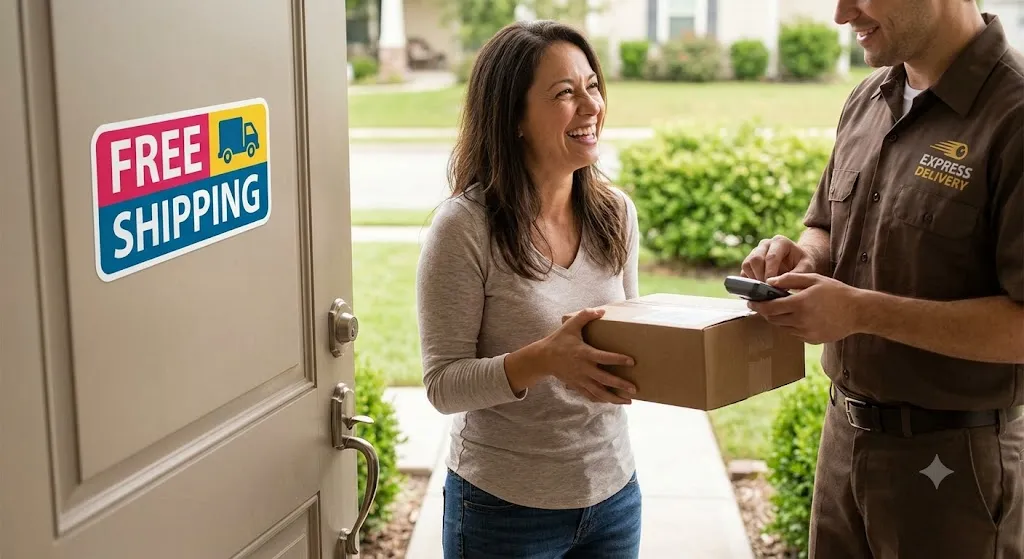
“Free Shipping Today” communicates value in just a few words.
Retailers frequently feature these offers in email campaigns, social media advertisements, homepage banners, and seasonal promotions because they consistently attract attention.
Seasonal Shopping and Free Shipping
The importance of free shipping becomes even more noticeable during major shopping events.
Holiday shoppers often purchase gifts from multiple retailers while carefully managing their budgets.
Shipping fees can quickly add up.
When one retailer offers free delivery while another charges extra, many customers choose the store that removes the additional expense.
This competitive advantage becomes especially valuable during busy sales periods when consumers have countless alternatives.
Customer Expectations Have Changed
Over the past decade, free shipping has shifted from being a special bonus to becoming a standard expectation for many online shoppers.
Large retailers have helped shape these expectations, making consumers less willing to pay separate delivery charges.
Smaller businesses face the challenge of balancing profitability with customer demand.
Many respond by offering limited-time free shipping promotions or minimum purchase thresholds instead of permanent free delivery.
These strategies help meet customer expectations without significantly reducing profits.
When Free Shipping Isn’t the Best Option
Although free shipping is highly effective, it isn’t suitable for every business.
Products that are extremely heavy, oversized, or expensive to transport may require shipping charges.
In these cases, transparency becomes even more important.
Customers are generally willing to pay shipping when they clearly understand why the cost exists.
Businesses should communicate delivery fees early in the shopping process rather than surprising buyers at checkout.
Clear communication helps preserve trust, even when free shipping isn’t possible.
The Bottom Line
Free shipping succeeds because it addresses both practical concerns and human psychology. It removes one of the most common obstacles to online purchases, creates a sense of value, simplifies pricing, and strengthens customer confidence. While businesses still bear shipping costs in one form or another, many recover those expenses through higher order values, increased conversion rates, and stronger customer loyalty.
In an increasingly competitive e-commerce marketplace, free shipping has evolved from a promotional perk into a strategic advantage. Retailers that use it thoughtfully can improve the shopping experience while encouraging more customers to complete purchases and return in the future.
For consumers, free shipping feels like a reward. For businesses, it often becomes one of the most effective tools for driving sales, building trust, and staying competitive in a crowded digital marketplace.
Frequently Asked Questions (FAQ)
Free shipping removes an extra cost that many shoppers dislike, making purchases feel simpler and more affordable. It also reduces hesitation during checkout.
Yes. Many businesses report higher conversion rates, fewer abandoned carts, and increased customer spending when free shipping is offered strategically.
Not always. Retailers often include shipping costs in product prices, require a minimum order amount, or absorb part of the expense as a marketing investment.
Many shoppers perceive free shipping as a greater value than an equivalent discount because it eliminates an additional fee at checkout and creates a more transparent buying experience.
Yes. Small businesses can offer free shipping by setting minimum purchase thresholds, limiting promotions to certain products or seasons, or factoring shipping costs into their pricing strategy.
Sources
- Baymard Institute – Research on shopping cart abandonment and checkout usability.
- National Retail Federation (NRF) – Consumer shopping trends and e-commerce insights.
- UPS – Pulse of the Online Shopper reports.
- Deloitte – Retail and consumer behavior research.
- McKinsey & Company – Consumer insights and e-commerce reports.
- Harvard Business Review – Articles on consumer psychology, pricing, and purchasing behavior.
About the Author
Ana Milojevik is a shopping writer and consumer content contributor at Shoopilyd.com, where she writes about online shopping, product research, e-commerce, price comparisons, and consumer advice. Her goal is to provide practical, trustworthy information that helps readers compare options, shop safely, and make more informed purchasing decisions.