What To Do If an Online Store Never Ships Your Order
You paid for an online order, but it never shipped. Learn how to contact sellers, file payment disputes, recover lost money, and protect yourself from online shopping scams.
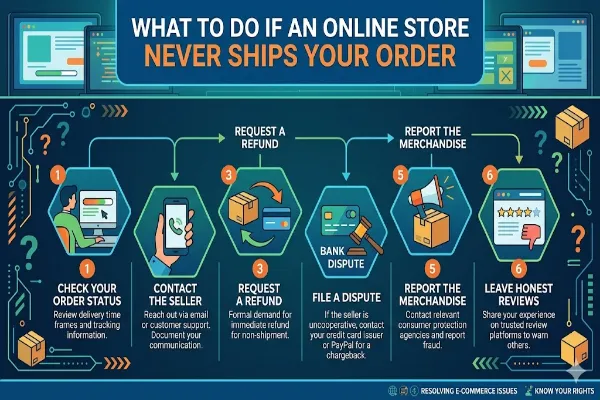
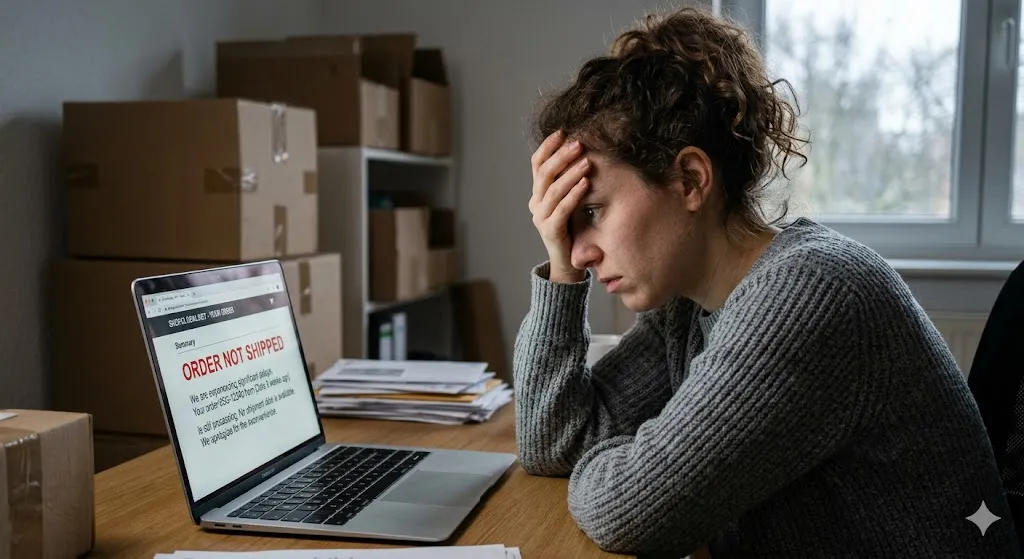
You placed an order, paid in full, watched the confirmation email arrive, and then waited. Days passed. Then weeks. The tracking number either never updated or disappeared entirely. The store went quiet. Your messages went unanswered. What felt like a straightforward online purchase has turned into something more frustrating and more confusing than you expected.
This situation is more common than most people realize. With the rise of dropshipping businesses, overseas sellers, and small independent online stores operating on thin margins and minimal staff, shipping delays and outright non-fulfillment have become experiences that a significant number of online shoppers encounter at some point. Knowing what to do when it happens, and in what order, can make the difference between getting your money back and losing it permanently.
This guide walks through every step you should take, from the first signs that something is wrong to the final options available when a seller refuses to cooperate.
Start by Understanding What Actually Happened
Before taking action, it helps to understand the most likely explanations for why your order never shipped. Not every unshipped order is a scam. Some are the result of operational problems, supply chain issues, or poor business management. Understanding which situation you are dealing with helps you respond appropriately.
Legitimate delays with poor communication. Many small online stores, particularly those run by solo operators or very small teams, struggle with communication during busy periods, stock shortages, or personal disruptions. Your order may be genuine and eventually fulfilled, but the seller has done a poor job of keeping you informed.
Dropshipping delays. A large number of online stores do not hold their own inventory. They take your order, forward it to a third-party supplier, often overseas, and that supplier ships directly to you. When the supply chain in that process breaks down, orders can stall for weeks or longer with no clear update.
Out of stock or discontinued items. Some sellers accept payment for items they no longer have or cannot source, either because their inventory system is poorly managed or because they made a deliberate choice to collect payment before confirming availability.
Financial difficulties. Some small businesses accept orders right up until the moment they can no longer operate. If a store is struggling financially, it may continue taking payment while being unable to fulfill orders. This is more common than people expect and sits in a legally complicated space between poor business practice and fraud.
Deliberate fraud. Some online stores are set up specifically to take payment without any intention of shipping products. These can range from individual scammers operating one-off fake shops to more organized operations running multiple storefronts. They are often identified by prices that seem unusually low, no verifiable contact information, and complete silence after payment is received.
Knowing which category your situation falls into shapes how urgently and aggressively you need to act.
Step One: Check Every Source of Information You Have
Before contacting anyone, gather all the information available to you. This serves two purposes. It helps you assess the situation accurately and it prepares you with documentation if you need to escalate.
Check your confirmation email carefully. Read the estimated shipping and delivery dates. Some sellers, particularly those sourcing from overseas suppliers, quote delivery windows of three to six weeks as standard. If you are within that window, your order may still be coming.
Log into your account on the store’s website. Check your order status there. Sometimes email updates are delayed or lost in spam filters while the order status on the site reflects a more current picture. Look for any notes, updates, or estimated shipping dates attached to your order.
Check the tracking number if one was provided. Use the carrier’s website directly rather than any link provided in the shipping notification email. Enter the tracking number manually and look at the full history. A tracking number that shows only a label created status with no subsequent scans may mean the seller generated a label but never actually handed the package to the carrier. This is a significant warning sign.
Search for recent reviews or complaints about the store. Look for the store name alongside words like reviews, complaints, scam, or not delivered on search engines and on review platforms like Trustpilot, Reddit, and the Better Business Bureau. If other customers are reporting the same experience at the same time, that tells you something important about the scale of the problem.
Check the store’s social media accounts. Sometimes a business that has gone quiet by email is still active on Instagram or Facebook. Their recent posts, or the absence of them, can tell you a great deal about whether the business is still operating.
Step Two: Contact the Seller Directly
If your order is genuinely overdue and you cannot find a satisfactory explanation through your own research, your next step is to contact the seller. Do this in writing so you have a record of the communication.
Send a clear, factual message. State your order number, the date of purchase, the amount paid, and the fact that you have not received shipping confirmation or your order. Keep the tone neutral and professional at this stage. Ask for a specific update on when your order will ship or, if it has already shipped, for a tracking number with the carrier name.
Use every contact channel available. Send an email and also try any contact form on the website, any live chat function if one exists, and direct messages on their social media accounts. Some businesses are more responsive on certain channels than others.
Set a clear deadline. In your message, state that you expect a response within a specific timeframe, typically three to five business days. This is reasonable and also creates a documented record that you gave the seller an opportunity to respond before you escalated.
Keep copies of everything. Screenshot your messages, save email threads, and note the dates and times of every communication attempt. This documentation becomes important if you need to file a dispute later.
If the seller responds and provides a credible explanation along with a concrete timeline, use your judgment about whether to wait. If the seller does not respond, responds vaguely without providing a tracking number or shipping date, or provides information that proves to be false when you check it, it is time to move to the next step.
Step Three: File a Dispute With Your Payment Method
This is one of the most important steps available to you and one that many consumers delay too long. Payment disputes have time limits, and waiting too long can cause you to lose your eligibility entirely.
Credit card chargeback. If you paid by credit card, you have the right to dispute the charge with your card issuer. This process is called a chargeback. Contact your credit card company, explain that you paid for goods that were never delivered, and ask to initiate a dispute. Most card issuers have a straightforward process for this and will provisionally credit your account while the investigation is underway. The seller then has an opportunity to respond, but in cases where goods were genuinely never delivered, the consumer typically prevails.
Be aware of the time limits. Most credit card companies allow chargebacks within 60 to 120 days of the transaction date, though this varies by card network and issuer. American Express, Visa, Mastercard, and Discover each have their own rules. Check yours as early as possible.
PayPal dispute. If you paid through PayPal, file a dispute through the PayPal Resolution Center as soon as your order is significantly overdue. Start with a dispute for item not received, which gives the seller a chance to respond. If the seller does not respond satisfactorily within the timeframe PayPal sets, you can escalate it to a formal claim. PayPal’s buyer protection program covers most purchases made through the platform, though there are exclusions, so review the terms carefully.
PayPal has a 180-day window from the transaction date for filing disputes, which is more generous than most credit cards. However, do not wait until the deadline is close. Starting the process early gives you more options.
Buy now pay later services. If you used a service like Klarna, Afterpay, or Affirm, contact them directly and explain the situation. These services have their own dispute processes and buyer protection policies. In many cases they can pause your payment obligation while the dispute is investigated.
Debit card disputes. Debit card disputes are generally more complicated than credit card disputes because the money has already left your bank account. Contact your bank directly and ask about their process for disputing a transaction where goods were not received. The protections are often weaker than with credit cards, which is one reason consumer advocates consistently recommend using a credit card for online purchases with unfamiliar sellers.
Bank transfer or wire transfer. If you paid by direct bank transfer, your options are significantly more limited. Banks can sometimes recall transfers if action is taken very quickly, but once the money has been received and moved by the recipient, recovery is extremely difficult. This is why consumer protection guidance universally advises against paying unfamiliar online sellers by bank transfer.
Cryptocurrency. If you paid in cryptocurrency, you have very limited recourse. Crypto transactions are generally irreversible, and there is no central authority to appeal to. Your options in this situation are largely limited to public reporting and legal action, both of which are difficult and uncertain.
Step Four: Report the Problem to Consumer Protection Authorities
Regardless of whether your payment dispute succeeds, reporting the problem to relevant consumer protection authorities serves an important purpose. It creates a record, contributes to patterns that regulators use to identify bad actors, and in some cases can trigger investigations that lead to enforcement action.
Federal Trade Commission (FTC) – United States. The FTC accepts consumer complaints about online shopping fraud and non-delivery at reportfraud.ftc.gov. They do not resolve individual disputes, but complaints are used to identify patterns and build cases against businesses engaged in systematic fraud.
Consumer Financial Protection Bureau (CFPB). If your dispute with a bank or credit card company was handled poorly, you can file a complaint with the CFPB at consumerfinance.gov. They do engage with individual complaints and can sometimes facilitate resolution with financial institutions.
Internet Crime Complaint Center (IC3). For situations that appear to involve deliberate fraud rather than poor business practices, the IC3 at ic3.gov accepts complaints about internet-based crime including online shopping fraud. The FBI operates this center and uses the data to track and pursue organized fraud operations.
Your state attorney general. Most U.S. states have a consumer protection division within the attorney general’s office that accepts complaints about businesses operating deceptively or failing to deliver goods as promised. These offices sometimes have more direct enforcement capacity at the local level than federal agencies.
Better Business Bureau (BBB). Filing a complaint with the BBB at bbb.org creates a public record and gives the business an opportunity to respond. The BBB has no enforcement power, but its public complaint records influence how other consumers evaluate businesses and can create reputational pressure that motivates resolution.
If the store is based outside the United States. The situation becomes more complicated with overseas sellers, particularly those based in countries with limited consumer protection enforcement. Econsumer.gov, operated by the International Consumer Protection and Enforcement Network, accepts complaints about cross-border shopping fraud. Your payment dispute process remains the most effective tool in these situations.
Step Five: Leave Public Reviews and Warnings
Once you have initiated a dispute and filed any relevant reports, consider leaving honest public reviews about your experience. This serves two purposes. It warns other potential customers before they make the same mistake, and it creates additional documented evidence of a pattern if the seller is engaging in systematic non-fulfillment.
Leave reviews on platforms where the store has a presence or where consumers are likely to find it. Trustpilot, Google reviews, the BBB website, and relevant subreddits are all appropriate venues. Be factual, specific, and accurate in what you write. Describe what happened, when it happened, what steps you took, and what the outcome was. Avoid exaggerated language that could be characterized as defamatory and stick to the facts of your experience.
If the seller is operating on a marketplace like Etsy, Amazon, or eBay rather than an independent website, leave a review on that marketplace as well and report the seller through the platform’s own reporting mechanism. Marketplaces have strong incentives to remove sellers who generate significant non-delivery complaints, and marketplace reports can result in faster action than external reports in some cases.
Step Six: Consider Legal Options
For most non-delivery situations, the payment dispute process is sufficient to recover the money. But in cases where disputes fail, amounts are large, or there is clear evidence of deliberate fraud, legal options may be worth considering.
Small claims court. If you can identify the business and its location, small claims court is a relatively accessible option for recovering amounts that fall within your state’s small claims limit, which typically ranges from a few thousand dollars to ten thousand dollars or more depending on the jurisdiction. The process does not require a lawyer, filing fees are modest, and the proceedings are designed to be navigable by ordinary people without legal training.
The challenge is that a judgment in your favor only helps if you can actually collect the money. If the business has no assets, has closed, or is based overseas, a judgment may be difficult or impossible to enforce.
Consult a consumer protection attorney. For larger amounts or situations involving systematic fraud affecting multiple consumers, a consultation with a consumer protection attorney is worth pursuing. Many attorneys in this area work on contingency, meaning they only collect a fee if they recover money for you. Some consumer protection laws also allow for attorney fee recovery, which makes these cases more attractive for attorneys to take on.
Class action potential. If a business has defrauded a large number of consumers in the same way, it may become the subject of a class action lawsuit. You can search to see whether any class actions have already been filed against the seller in question and consider joining if one exists. If not, an attorney can advise whether the situation might support a new action.
How to Protect Yourself in Future Online Purchases
Once you have dealt with the immediate situation, it is worth taking a few minutes to think about how to reduce the risk of this happening again. No precautions eliminate risk entirely, but some practices reduce it substantially.
Research sellers before purchasing. Before buying from a store you have not used before, spend a few minutes searching for reviews, complaints, and any information about how long the business has been operating. A new website with no reviews and prices significantly below market value is a combination worth treating with caution.
Use a credit card as your default payment method for online purchases. The chargeback protection that comes with credit card purchases is genuinely valuable. It is one of the most effective consumer protections available for online shopping and it costs nothing to use as your default approach.
Look for clear contact information before buying. A legitimate business has a physical address, a working phone number, and responsive customer service. If a website offers only a contact form with no other way to reach the seller, that is worth noting before you pay.
Be cautious with prices that seem too good to be true. Dramatically lower prices than any other seller is offering for the same product is one of the most consistent warning signs of fraudulent online stores. Legitimate pricing can vary, but extreme outliers usually have an explanation that does not work in the consumer’s favor.
Check the website’s age and registration. Tools like WHOIS lookup can tell you when a domain was registered. A website selling consumer goods that was registered only a few weeks ago should be approached with more caution than one that has been operating for several years.
Screenshot your order confirmation and keep records. The moment you place an order with an unfamiliar seller, take a screenshot of the confirmation page and save the confirmation email. Having this documentation immediately available speeds up any dispute process significantly if problems arise later.
Read the return and refund policy before purchasing. A policy that makes refunds extremely difficult or impossible, or one that is absent entirely, is a signal worth paying attention to before you part with your money.
What to Do When the Store Has Disappeared Entirely
Sometimes the situation is more extreme. The website is gone. The email address bounces. The social media accounts have been deleted. The phone number leads nowhere. In this case, your options narrow but do not disappear.
Your payment dispute remains your most important tool. File it immediately if you have not already, and explain in your dispute that the seller’s website and contact information have disappeared. This actually strengthens your case in most dispute processes, as it provides additional evidence that goods will not be delivered.
For reporting purposes, the IC3 and your state attorney general’s office are the most relevant contacts when a business appears to have vanished after taking payments. Document everything you can about the store before it disappears further, including screenshots of any cached pages, the domain name, and any business information you encountered during the purchase process.
Timing Is Everything
The single most important practical point in this entire guide is that timing matters enormously when dealing with non-delivery disputes. The longer you wait to initiate a payment dispute, the greater the risk that you will pass the deadline and lose your eligibility to recover your money through that channel.
If your order is significantly past its estimated delivery date and the seller is not providing credible, verifiable updates, do not wait. Start the dispute process while you are still within the window. You can withdraw a dispute if the situation resolves satisfactorily, but you cannot file one after the deadline has passed.
The instinct to give the seller more time, to assume that something is delayed rather than lost, and to avoid what feels like a confrontational action is understandable. It is also the instinct that causes many consumers to miss their window for recovery. Act early, document everything, and trust the consumer protection tools available to you.
Final Thoughts
An online order that never arrives is frustrating, confusing, and in some cases genuinely costly. The good news is that the consumer protection system, while imperfect, provides real tools for recovering money in most situations, provided those tools are used correctly and promptly.
The key steps are straightforward. Gather your documentation, contact the seller in writing, file a payment dispute through your card issuer or payment platform as soon as the situation warrants it, report the problem to relevant consumer protection authorities, and warn other consumers through honest public reviews.
Most situations resolve through the payment dispute process. The cases that do not resolve at that stage have additional options through legal channels, though those options require more time and effort.
The broader lesson, learned the hard way by too many online shoppers, is that the payment method you choose matters, the research you do before purchasing matters, and the speed with which you act when something goes wrong matters more than almost anything else. Armed with that knowledge, you are in a significantly stronger position the next time an online purchase does not go as expected.
Here’s a references and further reading section for the end of the article:
References & Further Reading
The information presented in this article draws on established consumer protection guidelines, legal frameworks, and authoritative resources covering online shopping rights, payment disputes, and fraud reporting. The following sources are recommended for readers who want to verify specific processes, understand their legal rights in greater depth, or find direct links to the reporting and dispute tools referenced throughout this article.
Official Consumer Protection & Reporting Resources
- Federal Trade Commission – Report Fraud – reportfraud.ftc.gov The official FTC portal for reporting online shopping fraud, non-delivery complaints, and deceptive business practices. The FTC uses complaint data to identify patterns and pursue enforcement action against businesses engaged in systematic consumer fraud. Also offers extensive consumer guidance at consumer.ftc.gov.
- Consumer Financial Protection Bureau (CFPB) – consumerfinance.gov The primary federal agency overseeing financial products and services, including credit card dispute processes and bank complaint resolution. The CFPB accepts individual complaints about financial institutions and publishes a searchable public complaint database that consumers can use to research how banks and card issuers handle disputes.
- Internet Crime Complaint Center (IC3) – ic3.gov Operated by the Federal Bureau of Investigation, the IC3 accepts complaints about internet-based crime including online shopping fraud, non-delivery scams, and fraudulent storefronts. Complaint data is used by federal law enforcement to identify and pursue organized fraud operations.
- Econsumer.gov – econsumer.gov An international consumer complaint portal operated by the International Consumer Protection and Enforcement Network, covering cross-border shopping fraud involving sellers based outside the United States. Particularly relevant for consumers who purchased from overseas sellers who failed to deliver.
- Better Business Bureau (BBB) – bbb.org Accepts consumer complaints against businesses and maintains a publicly searchable database of complaint histories and business ratings. While the BBB has no direct enforcement authority, its public records influence consumer decisions and can create reputational pressure that motivates sellers to resolve disputes.
- USA.gov – File a Consumer Complaint – usa.gov/consumer-complaints A centralized government resource that helps consumers identify the correct agency or organization for their specific type of complaint, including online shopping disputes, credit card problems, and cross-border fraud.
Payment Dispute & Chargeback Resources
- Visa – Dispute a Charge – usa.visa.com/support/consumer/card-benefits.html Official guidance from Visa on how to initiate a chargeback for goods not received, including timeframes and the documentation typically required to support a successful dispute.
- Mastercard – Chargeback Guide for Consumers – mastercard.us/en-us/personal/get-support.html Mastercard’s consumer support resource covering how disputes are handled on their network, including the rights cardholders have when purchases are not fulfilled as agreed.
- PayPal Resolution Center – paypal.com/us/webapps/mpcalhome/myaccount/resolution The direct portal for filing item not received disputes through PayPal’s buyer protection program. Includes step-by-step guidance on how to escalate a dispute to a claim if the seller does not respond satisfactorily within the initial dispute window.
- Consumer Financial Protection Bureau – Disputing Credit Card Charges – consumerfinance.gov/ask-cfpb/how-do-i-dispute-a-charge-on-my-credit-card-en-1253 A clear and authoritative explanation of how credit card dispute rights work under the Fair Credit Billing Act, including what qualifies as a valid dispute, how to file one, and what to do if your card issuer does not resolve it satisfactorily.
Legal Framework & Consumer Rights
- Fair Credit Billing Act (FCBA) – Federal consumer protection law administered by the FTC that gives credit card holders the right to dispute billing errors including charges for goods that were never delivered. Full text available at ftc.gov/legal-library/browse/statutes/fair-credit-billing-act.
- Electronic Fund Transfer Act (EFTA) – Governs consumer protections related to debit card transactions and electronic payments. Relevant for consumers who paid by debit card and are seeking to understand their dispute rights compared to credit card holders. Available through the Consumer Financial Protection Bureau’s regulatory resources.
- Nolo – Consumer Protection Law – nolo.com/legal-encyclopedia/consumer-protection A widely used plain-language legal resource covering consumer rights, small claims court procedures, and practical guidance on pursuing legal remedies for online shopping fraud. Particularly useful for readers considering small claims action or wanting to understand their legal options without consulting an attorney.
- American Bar Association – Finding Legal Help – americanbar.org/groups/legal_services/flh-home A resource for consumers who want to consult a consumer protection attorney, including guidance on finding low-cost or free legal assistance and understanding when professional legal advice is warranted.
Online Shopping Safety & Fraud Prevention
- FTC – Online Shopping – consumer.ftc.gov/articles/online-shopping The Federal Trade Commission’s consumer guidance on safe online shopping practices, recognizing warning signs of fraudulent stores, and understanding your rights when purchases go wrong.
- Cybersecurity & Infrastructure Security Agency (CISA) – Online Shopping Safety – cisa.gov/topics/cybersecurity-best-practices Government cybersecurity guidance covering how to evaluate the legitimacy of online stores, verify secure payment connections, and protect personal and financial information when shopping online.
- WHOIS Domain Lookup – whois.domaintools.com A free tool that allows consumers to check when a website domain was registered and who registered it. Useful for evaluating the age and legitimacy of unfamiliar online stores before making a purchase.
- Trustpilot – trustpilot.com One of the most widely used independent review platforms, where consumers can search for reviews of online stores and leave their own honest assessments. Useful both for researching sellers before purchasing and for documenting experiences after a problem occurs.
Further Reading on Consumer Rights & Online Fraud
- Levin, A., & Foley, J. (2020). Swiped: How to Protect Yourself in a World Full of Scammers, Phishers, and Identity Thieves. PublicAffairs. A comprehensive and accessible guide to protecting yourself from online fraud, covering payment security, identity theft, and practical steps for recovering from financial crimes.
- Which? – Online Shopping Rights – which.co.uk/consumer-rights/advice/online-shopping-rights A detailed guide from the United Kingdom’s leading consumer rights organization covering online purchase protections, chargeback rights, and what to do when deliveries fail. Particularly relevant for readers based in the United Kingdom navigating similar situations under UK consumer law.
- Australian Competition & Consumer Commission – Online Shopping – accc.gov.au/consumers/shopping-shipping-delivery/online-shopping Official consumer guidance from Australia’s primary competition and consumer protection regulator, covering online shopping rights, how to report non-delivery, and what remedies are available under Australian consumer law.
- European Consumer Centre Network – eccnet.eu A network of consumer advisory centers across European Union member states that provides free assistance to consumers involved in cross-border disputes within Europe, including situations where online purchases from EU-based sellers were never fulfilled.
State-Level Resources
- National Association of Attorneys General – naag.org A directory of all U.S. state attorneys general offices, each of which has a consumer protection division that accepts complaints about businesses operating deceptively or failing to fulfill orders. Searching your state’s attorney general website directly will provide the most current complaint submission process for your jurisdiction.
All resources listed in this section are included for informational purposes only. Links and contact details are accurate at the time of writing but may change over time. Readers are encouraged to verify current information directly with each organization. This article does not constitute legal advice. Readers dealing with significant financial losses or complex fraud situations are encouraged to consult a qualified consumer protection attorney in their jurisdiction.
About the Author
Ana Milojevik is a shopping writer and consumer content contributor at Shoopilyd.com, where she writes about online shopping, product research, e-commerce, price comparisons, and consumer advice. Her goal is to provide practical, trustworthy information that helps readers compare options, shop safely, and make more informed purchasing decisions.