What to Do If Your Online Order Says Delivered but You Never Received It
Your online order says delivered, but the package is nowhere to be found. Here’s what to check first, when to contact the carrier and seller, and what to do if you need a refund or payment dispute.
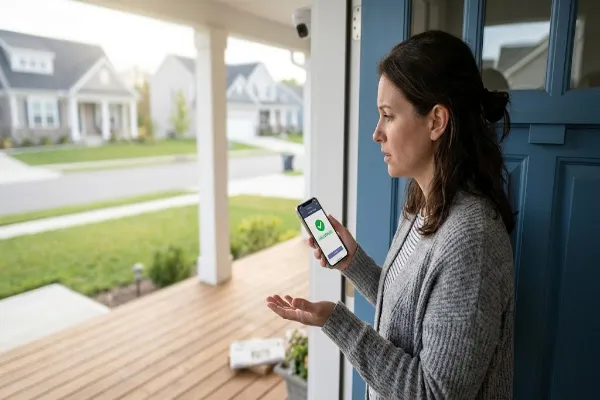
A woman looks for a missing package after receiving a contradictory "Delivered" notification on her smartphone.
You check the tracking. It says delivered. You walk outside. Nothing.
This happens more than most people realize. It’s frustrating, a little unsettling, and your first instinct is somewhere between confusion and panic. Take a breath. Most of these cases get sorted out. There’s a clear process for this, and working through it in order gives you the best shot at getting your package back — or your money.
Quick Answer
If your order says delivered but you don’t have it, start close to home: check the delivery photo, search your property, ask household members and neighbors, and check any lockers or reception desk. Still nothing? Contact the carrier, then the seller. Keep records as you go, and if the seller won’t help, a payment dispute is your backup option.
Here’s exactly what to do, step by step.
What Does “Delivered” Actually Mean When You Don’t Have the Package?
“Delivered” just means a driver scanned the package. That’s it. It doesn’t guarantee it’s sitting at your door, or even that it made it to the right address.
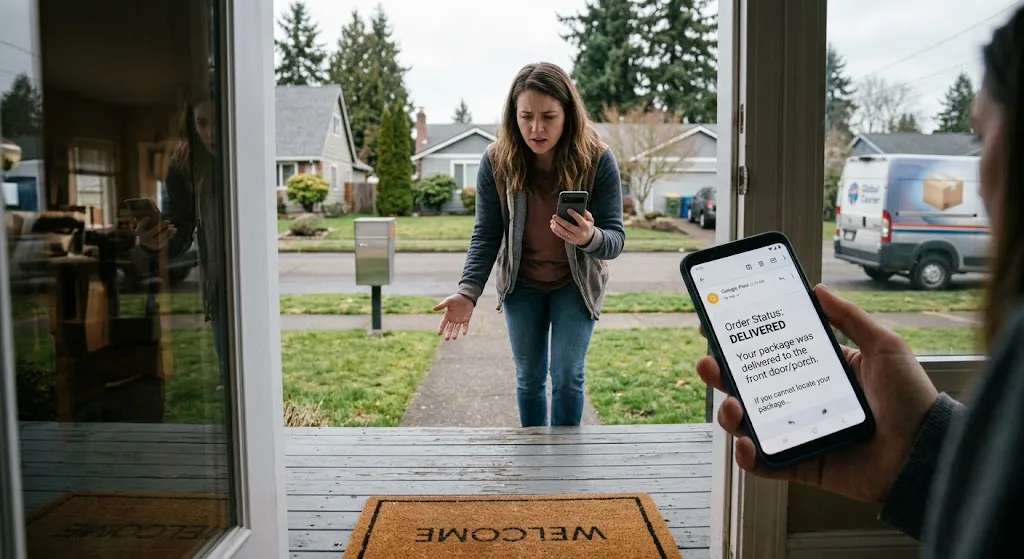
A few things usually explain the gap.
Sometimes it’s left somewhere you wouldn’t think to check — behind a planter, at a side door, tucked out of the rain. Sometimes it goes to a neighbor, a leasing office, or a locker instead of your door. Sometimes the scan happens a few minutes before the driver actually sets it down, so it’s genuinely not there yet. And sometimes, less often than people fear, it really was stolen after a legitimate drop-off.
Don’t jump straight to “stolen.” Work through the possibilities in order — you’ll usually find your answer before you get to the worst-case one.
Step 1: Check Around Your Property
Start close to home before you contact anyone.
Walk the full perimeter of your house or building, not just the front step. Side doors, back doors, the garage, behind any planters or furniture, anywhere a driver might tuck something out of sight or out of the weather.
If you live in an apartment, check the mailroom, the leasing office, and any package locker system your building uses. A lot of “missing” packages are just sitting in a locker with a pickup code buried in an email you haven’t opened yet.
If the delivered scan came in during the evening, check again the next morning. Drivers sometimes scan a stop as complete a few minutes before the package actually leaves the truck.
Step 2: Check the Delivery Photo or Proof of Delivery
Most tracking pages show more than just a status now.
Look for a delivery photo. UPS, FedEx, and Amazon commonly attach one to the tracking record, and it can save you a lot of guessing. It might show a door you don’t recognize, a house number that isn’t yours, or a spot on your own property you simply hadn’t checked.
Some carriers also log a location with the scan. If that doesn’t match your address, it’s worth mentioning when you call.
USPS tracking sometimes shows a note like “Delivered to Agent,” which means the package was handed to someone — building staff, for example — instead of left at your door.
If the photo clearly shows a property that isn’t yours, save it. That’s real evidence, and it’ll make everything easier from here.
Step 3: Ask Household Members, Neighbors, or Building Reception
Someone else may have already brought it inside.
Ask everyone in your household first. It’s an easy step to skip, and it solves this more often than you’d think.
Then check with neighbors on either side, and across the street if packages tend to sit in view where you live. A quick knock or text is usually all it takes.
If you’re in a building with reception or a doorman, just ask. Packages sit in back offices more often than people assume.
Step 4: Check Whether the Carrier Delivered It to the Wrong Address
Address mix-ups happen more than carriers like to admit.
Double-check the exact address on your confirmation email and tracking page. A typo at checkout, an old saved address, or a similar house number nearby can all send a package to the wrong door.
If your address is right but the delivery photo shows somewhere else, the mistake is probably on the carrier’s end. This happens more in apartment complexes and on streets with similar numbering, especially when a driver is covering an unfamiliar route.
Save that photo. It’s the clearest evidence you can hand the carrier or seller.
Step 5: Contact the Shipping Company
Checked everywhere, asked everyone, still nothing? Time to call the carrier.
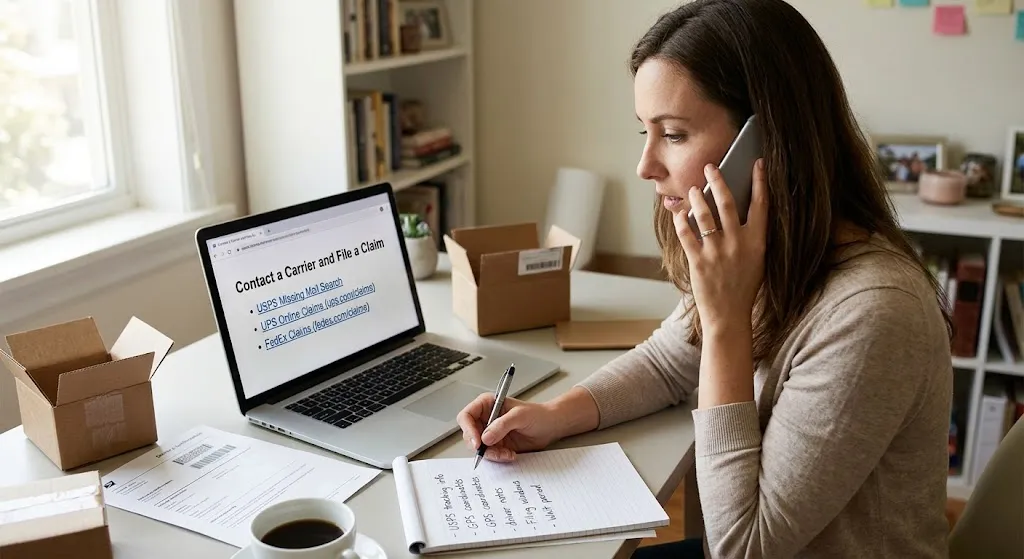
Have your tracking number ready. Ask what the delivery scan actually shows — the photo if there is one, any location data tied to it, and whether the driver left notes about where it was placed.
Filing windows and processes vary by carrier, and they do shift over time, so it’s worth confirming the current policy on the carrier’s site before you file anything. Here’s the general shape of it:
USPS runs a Missing Mail search for packages that genuinely can’t be found after a delivered scan. It’s for packages that seem to have actually gone astray, not one that’s just running a few hours behind.
UPS handles this through an online claims process at ups.com/claims. There’s a short waiting period before you can file, and a deadline for how long after delivery you’re able to submit — don’t let it sit too long.
FedEx also runs claims online, with its own waiting period and deadline. International shipments usually have a tighter window than domestic ones.
Check each carrier’s claims page for the current numbers when you’re ready to file. These details get updated, so work from what’s accurate today rather than an old blog post.
Step 6: Contact the Seller
If the carrier can’t resolve it, loop in the seller or retailer.
Most sellers — Amazon, Etsy, Walmart, eBay, and similar platforms — have a process for “item not received” cases. Tell them plainly: tracking shows delivered, the package never showed up, and you’ve already checked your property and confirmed the address.
Many sellers will open their own investigation with the carrier, send a replacement, or issue a refund, depending on their policy. Do this even if you’ve already talked to the carrier — in some cases the seller is the only one who can file a formal claim, since they’re the one who bought the shipping label.
Keep this conversation in writing where you can. Emails and chat transcripts give you something to point back to if you need to escalate.
What If the Seller Says the Package Was Delivered?
Sometimes a seller pushes back and points at the tracking status as proof.
Stay calm and stick to the facts. Tell them exactly what you’ve already done: checked your property, checked with neighbors, confirmed the address, reviewed the delivery photo. If that photo shows a location that clearly isn’t yours, say so and share it.
If they still won’t budge, ask directly: “What’s your policy for an order marked delivered that the customer never received?” A reputable seller has an answer. If they keep deflecting or stop responding, that’s your cue to escalate — through the marketplace’s dispute process or your payment provider.
When Should You Contact Your Credit Card Company or Payment Provider?
This is your backup option, not your first move.
If the seller refuses to help, goes quiet, or denies responsibility, you can dispute the charge with your card issuer or payment provider. Most of them — including PayPal — have a formal process for exactly this, usually called an “item not received” dispute.
Before you file, gather your documentation:
- The order confirmation and receipt
- The tracking history showing the delivered status
- The delivery photo, if there is one
- Screenshots of your communication with the seller
- Notes on what you found — or didn’t find — when you checked your property
Disputes take a little time to resolve, so this route works best once you’ve genuinely given the seller a chance to fix it and they haven’t.
What If the Package Was Stolen?
Porch theft happens, and it’s worth taking seriously if that’s what you’re actually looking at.
If you have a doorbell or security camera, check the footage around the delivery time. It’ll tell you a lot — whether the package was actually dropped off, whether it was delivered somewhere else, or whether someone picked it up afterward.
If theft looks likely, consider a police report, especially for anything of real value. It’s not just symbolic — some insurers and payment disputes ask for one, and having it on file can strengthen your case with the seller or your card issuer later.
What Evidence Should You Keep?
Good documentation makes every step above faster and more convincing.
Hold onto the order confirmation and receipt. Save the full tracking history, not just the final “delivered” status. Screenshot the delivery photo if there is one. Keep a record of every conversation with the carrier and seller — dates, names, whatever you’ve got. If you’re heading toward a dispute or police report, save any camera footage before it gets automatically deleted.
None of this needs to be fancy. A folder on your phone or a single notes app entry is enough, and it saves you from repeating your whole story from memory every time you talk to someone new.
How to Avoid Delivery Problems in the Future
A few small habits cut down on this happening again.
Request signature confirmation for anything expensive, when it’s an option. It adds a step, but it clears up almost all ambiguity about whether something actually arrived.
Consider a package locker or delivery box, or leave a note asking drivers to place items somewhere less visible from the street. If you’ve got a security camera, point it at your actual delivery spot, not just the front door.
Ship to somewhere reliably staffed during the day when you can — work, a trusted neighbor, a locker service. And keep half an eye on tracking as deliveries get close. Catching a wrong-address delivery within an hour or two gives you a much better shot at getting it back than finding out three days later.
FAQ
Give it until the next morning if the delivered scan came in during the evening. Still nothing after a full day, and you’ve checked your property and asked around? It’s reasonable to call the carrier.
Depends on who bought the shipping label and what their specific policies say. Often the seller handles the refund or replacement directly, then sorts it out with the carrier separately. Contacting both gives you the best shot at a fast answer.
Not every shipment includes it. If it’s missing, lean on the other steps — check your property thoroughly, ask neighbors, and ask the carrier directly what they do have on file for that scan.
Sometimes, depending on the seller’s policy, whether you had shipping protection, and how you paid. This is exactly why documentation matters — camera footage, a police report if it’s warranted, and a clear paper trail all help your case with the seller or in a payment dispute.
For something cheap, most people skip it. For something expensive, or if you’ve got footage suggesting theft, a report can genuinely help — both for insurance and for backing up a dispute later.
Save the tracking info and delivery photo, then go straight to the carrier and seller. Tell them clearly that the package wasn’t delivered to the address on your order. That evidence usually speeds up the investigation on both ends.
Final Thoughts
A “delivered” status without a package in hand is stressful, but it’s rarely a dead end.
Work through it in order. Check your property. Look at the photo and any location data. Ask the people around you. Call the carrier, then the seller. Keep your documentation as you go, and use your card issuer’s dispute process if the seller won’t budge.
Most of these get resolved once you follow the process. Staying organized and a little persistent is usually all it takes.
About the Author
Ana Milojevik is a shopping writer and consumer content contributor at Shoopilyd.com, where she writes about online shopping, product research, e-commerce, price comparisons, and consumer advice. Her goal is to provide practical, trustworthy information that helps readers compare options, shop safely, and make more informed purchasing decisions.