What to Do If Your Credit Card Is Charged by a Fake Online Store
If your credit card was charged by a fake online store, acting quickly can help protect your money. Learn how to dispute the charge, contact your card issuer, secure your account, and avoid future shopping scams.
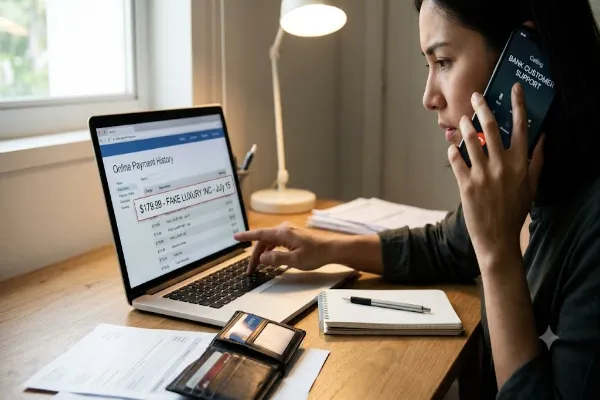
Recognizing a fraudulent charge early and contacting your card issuer immediately is crucial to recovering lost funds from online scams.
It usually starts the same way. You spot an ad on Instagram or Facebook for a product that looks too good to pass up, a designer bag at eighty percent off, a gadget nobody else seems to be selling, or a piece of furniture with suspiciously perfect reviews. You order it, enter your card details, and either the item never shows up, or something arrives that looks nothing like what was advertised, if anything arrives at all.
Fake online stores have become a genuinely widespread problem, often built specifically to look legitimate just long enough to collect payments before disappearing entirely. If you have realized your card was charged by one of these sites, here is exactly what to do, in order, starting from the moment you notice something is wrong.
Step One: Confirm What Actually Happened
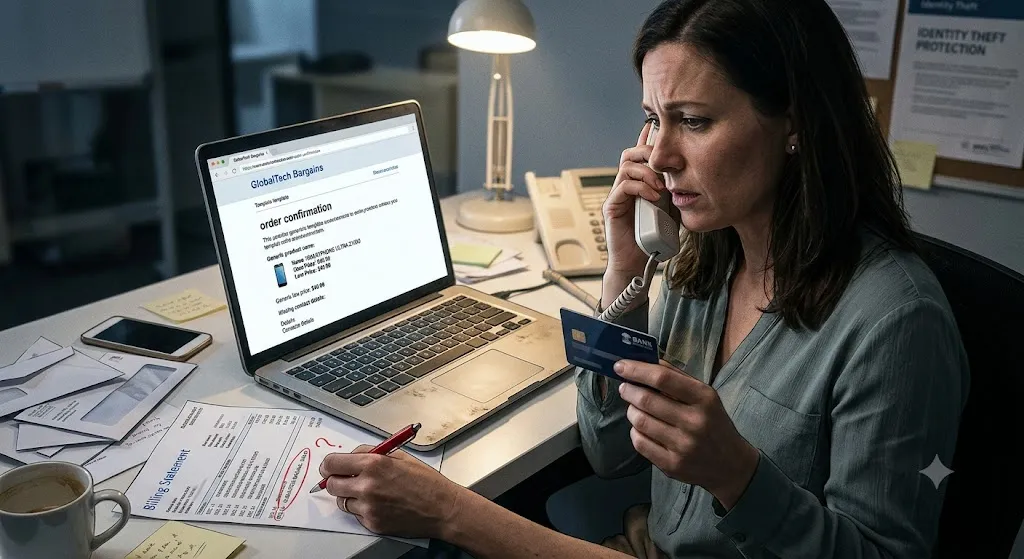
Before taking action, it helps to be clear about what you are actually dealing with. Sometimes a charge that looks unfamiliar is simply a legitimate purchase billed under an unexpected company name, which is a common and mostly harmless quirk of how some businesses process payments. Pull up the transaction on your bank or card app and look closely at the merchant name, the amount, and the date. If it lines up with something you genuinely ordered, even if the billing name looks strange, this may not be a scam at all.
If the charge does not match anything you remember buying, or if you did order from a site but the site has since vanished, stopped responding to emails, or turned out to be selling counterfeit or nonexistent products, you are likely dealing with a fake store situation, and the steps below apply.
Step Two: Contact Your Card Issuer Immediately
This is the single most important step, and time matters here. Call the number on the back of your card, or use your bank’s official app or website, and report the charge as fraudulent or as a scam purchase. Most major card issuers have a dedicated fraud or disputes department that handles exactly this kind of situation.
Explain clearly what happened: the name of the store, roughly when you ordered, what you were told you were purchasing, and why you now believe the store is fraudulent, whether that is because the product never arrived, the site has disappeared, or you have since found other reports online describing the same experience. Most card issuers will place a temporary hold or credit on the disputed amount while they investigate, which can offer some immediate relief even before the case is fully resolved.
Step Three: Formally Dispute the Charge
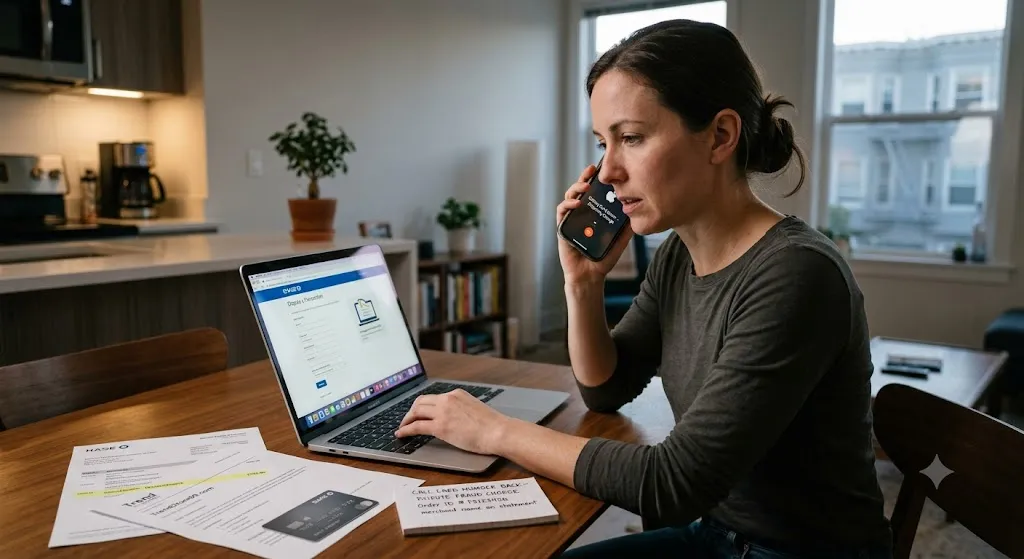
Depending on your card issuer, reporting the fraud verbally may automatically trigger a formal dispute, sometimes called a chargeback. In other cases, you may need to submit a written dispute through your online banking portal, along with any supporting details.
Useful evidence to gather and include with a dispute typically includes: a screenshot or saved copy of the store’s website, especially the product page and checkout page, in case the site is taken down before your bank can review it, any order confirmation emails, receipts, or tracking numbers you received, screenshots of any communication with the store, particularly if they stopped responding once you asked about a refund, and, if relevant, evidence that the product never arrived or arrived significantly different from what was advertised.
Under consumer protection rules that apply to most major credit cards, cardholders generally have significant protection against being held responsible for charges tied to fraud or goods that were never delivered as described, though the exact process and time limits for filing a dispute vary by issuer and card network, so it is worth asking your bank directly about their specific deadline for filing.
Step Four: Freeze or Replace the Card
Once a fake store has your card number, there is a real risk that number could be used again, either by the same scam operation or if the card details were harvested and sold elsewhere. Most banking apps now allow you to freeze a card instantly, which stops new charges without requiring a full card replacement, giving you a quick way to cut off risk while you sort out the dispute.
In most cases, especially if the fraud has already happened once, it is worth asking your card issuer to issue a completely new card number rather than relying on a freeze alone. This closes off the compromised number entirely and prevents any further attempts using those same details.
Step Five: Check for Broader Exposure
A fake store charge is not always an isolated incident. If you created an account on the site, reused a password you use elsewhere, or entered other personal information like your address, phone number, or date of birth, it is worth taking a few extra precautions.
Change the password on that account and on any other account where you reused the same password, since credentials from scam sites sometimes get collected and tested against other services. If you are not already using a password manager, this is a reasonable moment to start, since it makes using unique passwords for every site far more practical. Keep an eye on your bank and credit card statements over the following weeks for any additional suspicious activity, and consider setting up transaction alerts if your bank offers them, so you get notified immediately of any new charges rather than discovering them days later.
If you shared more sensitive information, such as a copy of an ID or details that could support identity theft beyond a simple financial charge, it is worth checking your credit report for unfamiliar accounts or inquiries, and considering a fraud alert or credit freeze with the major credit bureaus as an added layer of protection.
Step Six: Report the Scam Beyond Your Bank
Disputing the charge protects your own money, but reporting the scam more broadly helps limit the damage to others and creates a paper trail that can matter later.
In the United States, the Federal Trade Commission accepts reports of scams through its official reporting site, and this information feeds into broader investigations even when individual cases are not pursued directly. Many countries have an equivalent consumer protection agency worth reporting to as well. If the fake store was promoted through a specific social media ad, reporting the ad and the account directly to the platform can help get it taken down faster, since these operations often run several near-identical storefronts at once under different names. If you paid using a payment processor like PayPal in addition to a card, report the transaction there too, since some processors maintain their own fraud databases and can flag repeat offenders.
How to Spot a Fake Store Before You Pay
Prevention is obviously easier than cleanup, and a few consistent warning signs tend to show up across most fake online stores.
Prices that are dramatically lower than anywhere else for the same item are one of the most reliable red flags, especially for well-known branded products. Legitimate retailers rarely discount popular items by seventy or eighty percent without a very clear, time-limited reason.
A lack of verifiable contact information is another common tell. Legitimate stores typically list a real customer service email, and often a phone number or physical address. Fake stores frequently have none of this, or list a contact form that never actually generates a response.
Reviews worth checking carefully, since fake stores often either have no reviews at all, suspiciously uniform five-star reviews with generic language, or reviews that appear to have been copied wholesale from other retailers. Searching the exact product name or store name alongside the word “scam” or “reviews” before purchasing can surface complaints from other buyers who got there first.
A very recently registered domain is another signal worth checking, since scam storefronts are frequently built, used for a short burst of sales, then abandoned once complaints start piling up. Free tools exist that let you look up how recently a website’s domain was registered, and a domain that is only a few weeks or months old selling what claims to be an established brand’s products is worth extra scrutiny.
Checkout pages that feel unusually bare-bones, lack a secure payment icon, or push you toward unusual payment methods like direct bank transfers or cryptocurrency instead of standard card processing are additional warning signs that a legitimate, established retailer would be unlikely to rely on.
A Final Note
Getting caught by a fake online store is more common than most people assume, and it does not reflect carelessness so much as how convincingly these operations have learned to mimic real retailers. The most important thing is speed: contacting your card issuer as soon as you suspect something is wrong gives you the best chance at recovering the charge and limiting any further exposure. Everything after that, from freezing the card to reporting the scam more broadly, is about closing the door before it can happen again.
About the Author
Ana Milojevik is a shopping writer and consumer content contributor at Shoopilyd.com, where she writes about online shopping, product research, e-commerce, price comparisons, and consumer advice. Her goal is to provide practical, trustworthy information that helps readers compare options, shop safely, and make more informed purchasing decisions.